Rubber Wet Pour vs Artificial Grass for Playgrounds
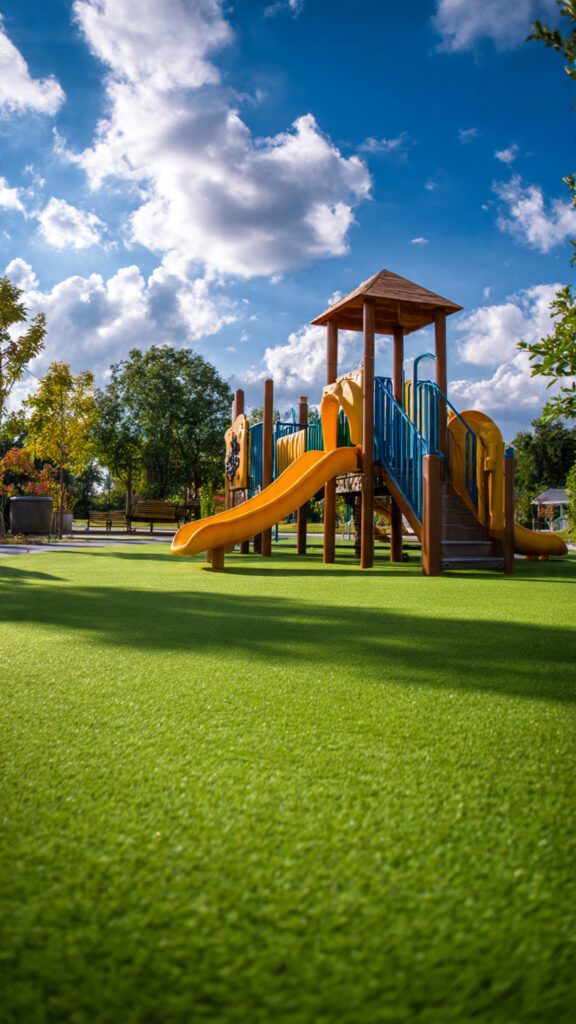
Playground owners in Randburg and Midrand want surfaces that stay safe and durable under heavy use. This guide compares rubber wet pour and artificial grass across safety, durability, maintenance, cost, and play value.
Quick Verdict — Which Surface Works Best?
If you need certified fall protection, rubber wet pour delivers strong shock absorption. If you want a natural look, easy upkeep, and long wear, commercial-grade artificial grass is usually the best choice. Below is a clear breakdown to help you decide.
Safety and Fall Protection
Safety standards such as ASTM F1292 and EN 1177 define fall-height performance. Rubber wet pour meets these standards consistently because installers adjust thickness for impact absorption. Artificial grass requires a certified shock pad to achieve similar fall protection. LawnKing’s playground turf pages explain options and suitability:
https://lawnking.co.za/playground-turf-artificial-grass/
https://lawnking.co.za/is-artificial-grass-safe-for-childrens-play-areas-in-south-africa/
Durability in High-Traffic Zones
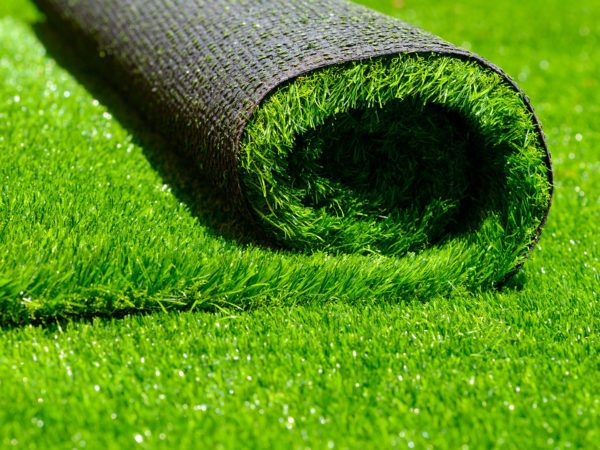
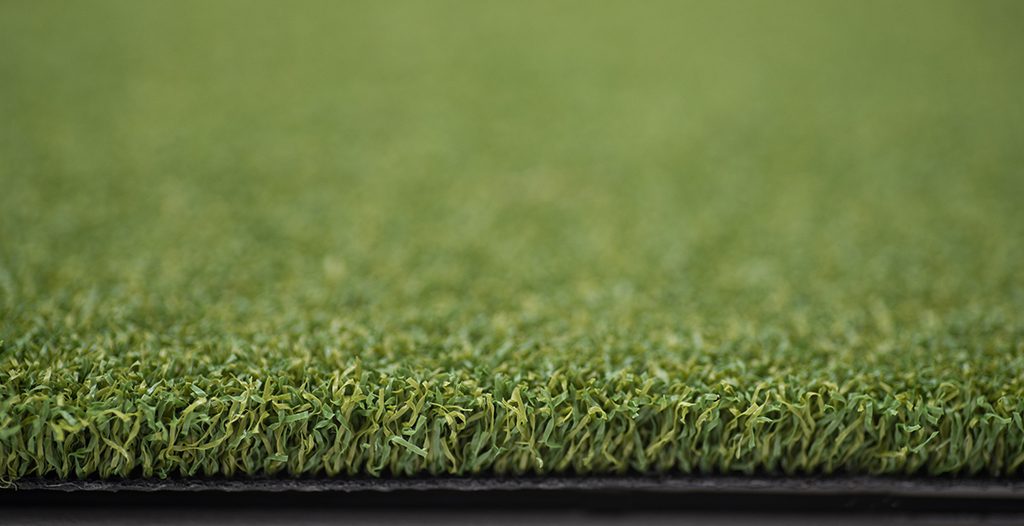
Artificial grass built for playgrounds handles heavy use well. Turf options such as LawnKing’s 30mm and 35mm products offer dense, UV-stable fibres that recover quickly after play:
https://lawnking.co.za/product/30mm-artificial-grass/
https://lawnking.co.za/product/35mm-artificial-grass/
Rubber wet pour also performs strongly under constant foot traffic. It resists rutting and maintains an even surface. Over many years, it may need spot repairs, especially in older SBR systems.
Maintenance Requirements
Artificial grass needs light but regular care. Brushing the fibers, removing debris, and rinsing spills keeps it looking fresh. LawnKing’s shop offers related turf products and infill options:
https://lawnking.co.za/shop/
Rubber wet pour requires minimal daily upkeep. Clean spills, check drainage, and repair small cracks quickly. Both surfaces benefit from regular inspections.
Heat, Drainage and Comfort
Artificial grass can warm up in direct sun, but modern UV-stabilised turf and proper infill reduce heat. LawnKing’s product pages highlight drainage systems that help with comfort and runoff.
Rubber wet pour also heats up but remains comfortable with the right colour choices. Both surfaces drain well when installed on a proper base.
Cost Considerations
Rubber wet pour usually costs more upfront. Artificial grass often comes at a lower initial price. However, when artificial grass includes a shock pad for safety compliance, its cost may approach that of rubber wet pour. LawnKing’s sports turf guide gives helpful cost and installation insights:
https://lawnking.co.za/sports-turf-artificial-turf/
Lifespan and Warranty
Quality artificial grass lasts 7–10 years, with LawnKing offering warranties up to 8 years on certain products. Rubber wet pour surfaces typically last 8–15 years depending on use and UV exposure.
Play Value and Accessibility
Artificial grass offers a natural play feel. Kids can run, roll, and sit on it comfortably. It also supports wheeled toys and mobility equipment when installed on a firm base.
Rubber wet pour creates a smooth, seamless, wheelchair-friendly surface ideal for inclusive playgrounds.
Environmental and Health Notes
Choose certified, non-toxic materials. LawnKing provides turf options safe for children and pets, with detailed hygiene and drainage insights:
https://lawnking.co.za/is-artificial-grass-safe-for-childrens-play-areas-in-south-africa/
Recommendations for High-Traffic Playgrounds
-
Choose rubber wet pour for maximum fall protection and seamless accessibility.
-
Choose commercial-grade artificial grass (30–35mm) for a natural look, low maintenance, and strong durability.
-
Pick artificial grass with a shock pad when you need both safety compliance and a green appearance.
-
Review LawnKing’s playground and sports turf systems for tested options:
• https://lawnking.co.za/playground-turf-artificial-grass/
• https://lawnking.co.za/sports-turf-artificial-turf/
Local Action Steps
Plan your surface by measuring equipment heights and identifying required fall protection. Then request site evaluation and quotes from LawnKing in Randburg and Midrand. Use these pages as a starting point:
Global guides for safety standards:
-
ASTM F1292 (impact attenuation)
-
CPSC Playground Handbook
Final Takeaway
Both surfaces perform well when specified correctly. Choose rubber wet pour for top safety and accessibility. Choose commercial artificial grass for low maintenance, long wear, and natural aesthetics. Combine artificial grass with a shock pad for the best of both worlds. LawnKing offers expert guidance, certified products and full installation services for playgrounds in Randburg and Midrand.
Recent Posts:
- How Long Does Artificial Grass Installation Take for a Standard Sports Field?
- What Fall Height Protection Does Rubber Wet Pour Provide for School Playgrounds?
- Can Rubber Wet Pour Withstand Johannesburg’s Summer Heat and Winter Frost?
- How Do You Maintain Artificial Grass on Athletic Fields in Johannesburg’s Climate?
- What Is the Cost Difference Between Rubber Wet Pour and Artificial Grass in Johannesburg?