How Much Fall-Height Protection Does Rubber Wet Pour Offer?
Choosing the right surfacing for school playgrounds is a critical safety decision. At LawnKing, serving clients across Randburg, Midrand, and beyond, we understand how serious this is. That’s why many of our artificial grass playground installations incorporate rubber wet pour or shock-absorbing underlayers to comply with fall-height safety standards. In this post, we’ll unpack what fall-height protection rubber wet pour provides, why it matters, and how LawnKing integrates these systems.
Why Fall Height Protection Matters for Schools
Falls cause the majority of playground injuries. Consequently, safety officers and facility managers must plan surfacing around the height of nearby equipment. A jungle gym that stands two metres tall needs far more cushioning than a low balance beam. Get the surfacing wrong, and a minor tumble can turn into a serious head injury.
South African schools increasingly follow international benchmarks for this reason. The CPSC Public Playground Safety Handbook remains one of the most widely referenced resources worldwide. It outlines how surfacing depth must scale with equipment height, and why loose-fill materials alone often fall short.
Understanding Critical Fall Height
“Critical fall height” describes the tallest point from which a fall onto a surface would still avoid a life-threatening head injury. Every rubber wet pour installation gets engineered around this figure. Consequently, installers first measure the equipment’s highest accessible point, then calculate the exact thickness required beneath it.
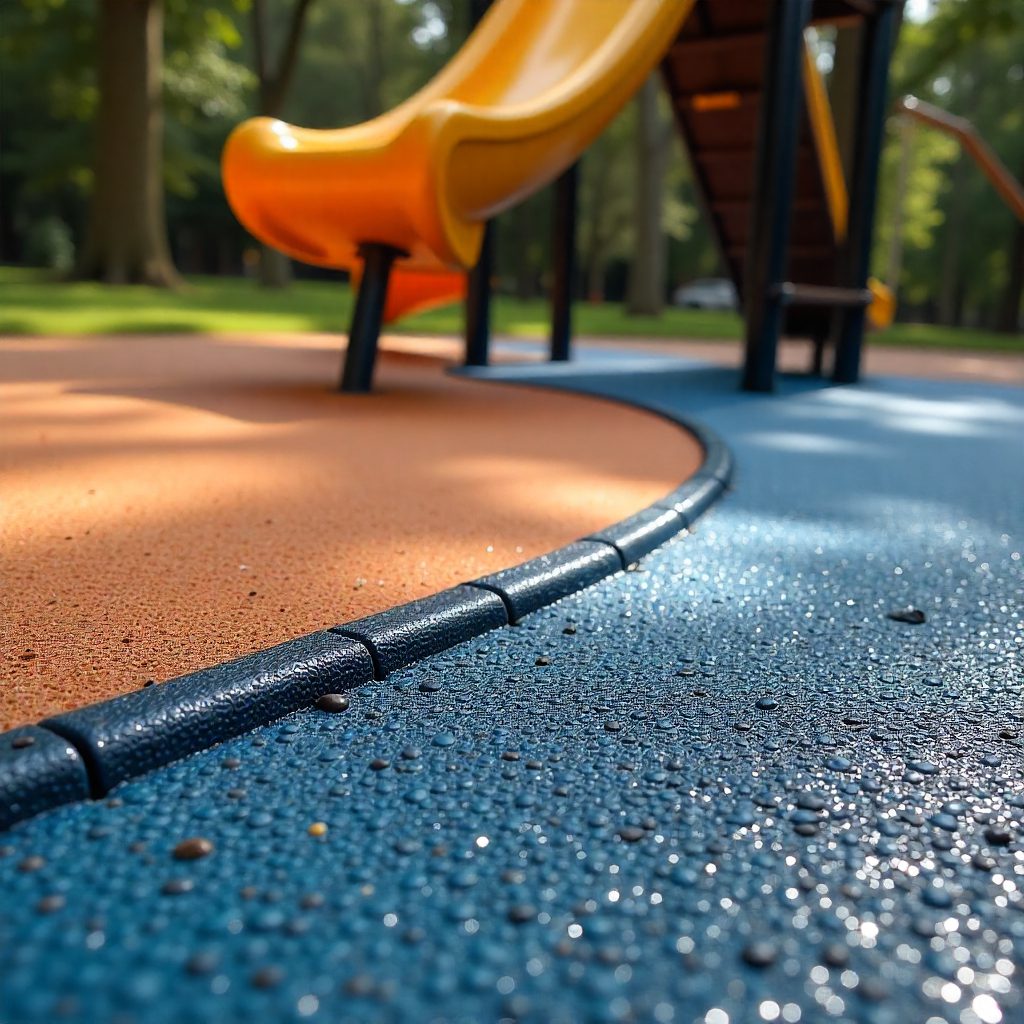
Two rubber layers work together to achieve this. The base layer uses SBR (styrene-butadiene rubber), sourced from recycled tyres. This layer absorbs the bulk of the impact energy. On top sits an EPDM layer, which adds colour, grip, and weather resistance. Together, these layers create a surface that flexes on impact and springs back afterward.
How Thickness Changes With Equipment Height
Thickness makes the biggest difference to protection levels. Low equipment, under roughly 1.5 metres, generally needs a thinner pour. Taller climbing structures, however, require a much deeper base layer to bring the critical fall height up to standard. Installers typically work within a 20mm to 100mm range, adjusting the depth as equipment height increases.
This is why a qualified installer always assesses each play zone individually. A single playground often mixes low balance equipment with taller jungle gyms, so thickness can vary from one zone to the next.
Safety Standards Behind Rubber Wet Pour
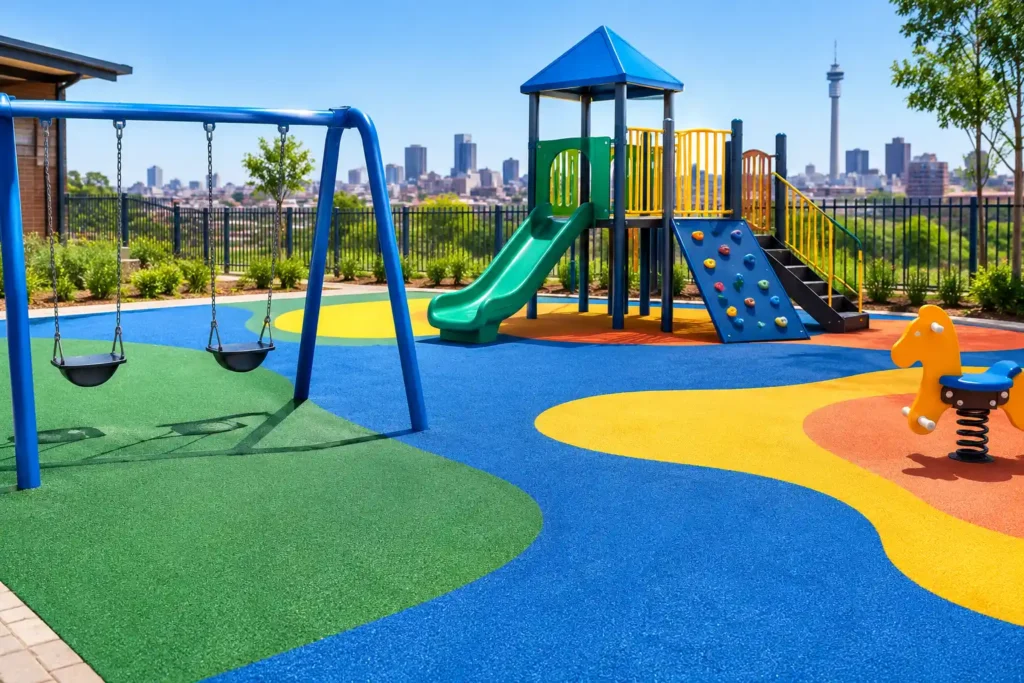
Rubber wet pour surfacing gets tested against internationally recognised standards, including ASTM F1292 and EN 1177. These standards define exactly how much impact a surface must absorb before it earns certification. RYNO Systems explains this testing process in detail, showing how the two-layer wet pour system meets these benchmarks consistently.
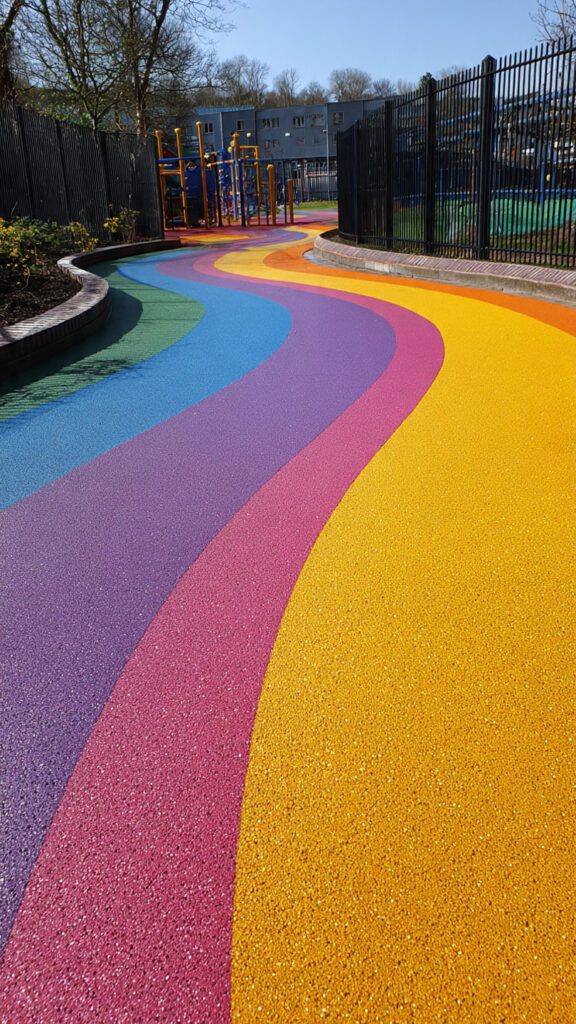
Because rubber wet pour is poured and cured on site, it also forms a completely seamless surface. There are no tiles, no seams, and no trip hazards. This matters just as much as impact absorption, since uneven joins cause a large share of everyday playground falls.
Comparing Rubber Wet Pour to Other Surfaces
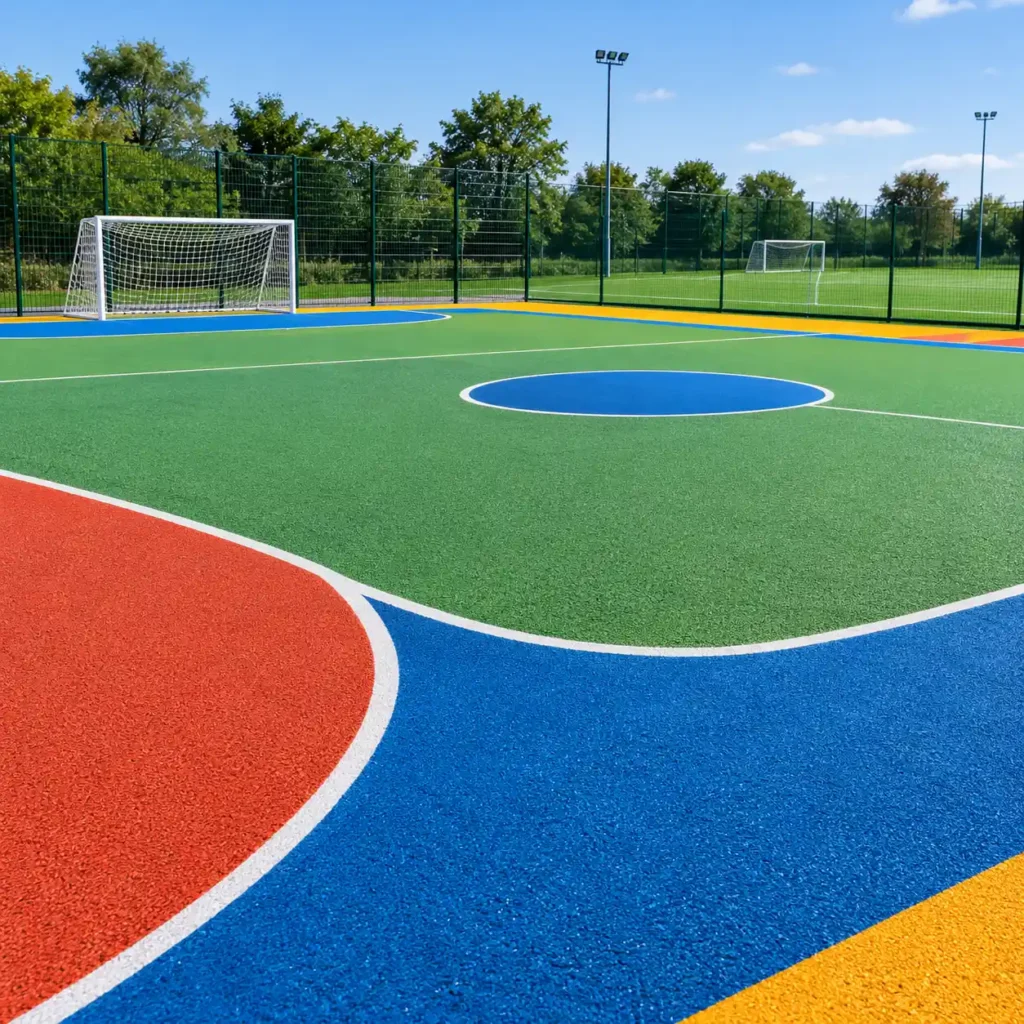
Many schools also consider artificial grass for their play areas, and rightly so. Artificial grass gives a soft, natural-looking surface that suits general play areas well. However, standard turf alone doesn’t reach the same critical fall height ratings as rubber wet pour, unless it’s paired with a certified shock pad underneath.
Our detailed comparison, Is Rubber Wet Pour or Artificial Grass Better for High-Traffic Playground Areas?, walks through this trade-off further. In short, rubber wet pour wins where certified fall protection is non-negotiable, while artificial grass playground turf suits lower-risk zones that still need a soft, child-friendly feel.
For schools weighing up child safety more broadly, our guide on whether artificial grass is safe for children’s play areas covers hygiene, drainage, and impact testing across both surface types.
Durability and Long-Term Performance
Fall protection only holds up if the surface stays in good condition. Over time, rubber wet pour can lose some cushioning through wear, UV exposure, and heavy foot traffic. Regular inspection catches this early, before protection levels drop below safe thresholds.
South African schools face an added challenge: extreme summer heat and cold winter mornings. Fortunately, quality rubber wet pour handles these swings well. Our article on whether rubber wet pour can withstand Johannesburg’s summer heat and winter frost explains how the material performs through Gauteng’s seasonal extremes.
Routine cleaning also protects fall-height performance, since dirt and organic build-up can weaken the surface’s binder over time. Our guide on cleaning and sanitising rubber wet pour surfaces covers the maintenance steps schools should follow between deeper resurfacing cycles. For schools budgeting further ahead, our breakdown of how long rubber wet pour surfacing lasts on Johannesburg playgrounds sets realistic expectations for replacement timing.
Getting the Right Fall Protection for Your School
Every playground layout differs, so fall height protection can’t follow a one-size-fits-all formula. Equipment height, ground conditions, and expected foot traffic all shape the ideal surfacing plan. That’s why a site assessment matters more than a generic thickness guide.
LawnKing Gardens installs certified rubber wet pour surfacing for schools throughout Randburg and Midrand, alongside artificial grass and sports turf solutions for wider recreational areas. Our team measures each play zone, calculates the required critical fall height, and installs surfacing that meets recognised safety standards from day one.
Ready to make your school’s playground safer? Get in touch with LawnKing Gardens for a site assessment and a tailored quote.
Recent Posts:
- Can Rubber Wet Pour Withstand Johannesburg’s Summer Heat and Winter Frost?
- How Do You Maintain Artificial Grass on Athletic Fields in Johannesburg’s Climate?
- What Is the Cost Difference Between Rubber Wet Pour and Artificial Grass in Johannesburg?
- Is Artificial Grass Safe for Children’s Play Areas in South Africa
- How Long Does Rubber Wet Pour Surfacing Last on Johannesburg Playgrounds?