Wetpour Rubber Surfacing for Sports Fields: Benefits and Installation Process
Every sports facility needs a safe surface. Players fall, slide and land hard. A good surface absorbs that impact and keeps the game moving. That is why wetpour rubber surfacing has become a popular choice for schools, clubs and estates across Gauteng.
In this guide, we explain how wetpour rubber surfacing works on sports fields. We also show where it fits best and where artificial turf does the job better. If you plan a sports project in Randburg, Midrand or the surrounding areas, this will help you decide.
What Is Wetpour Rubber Surfacing?
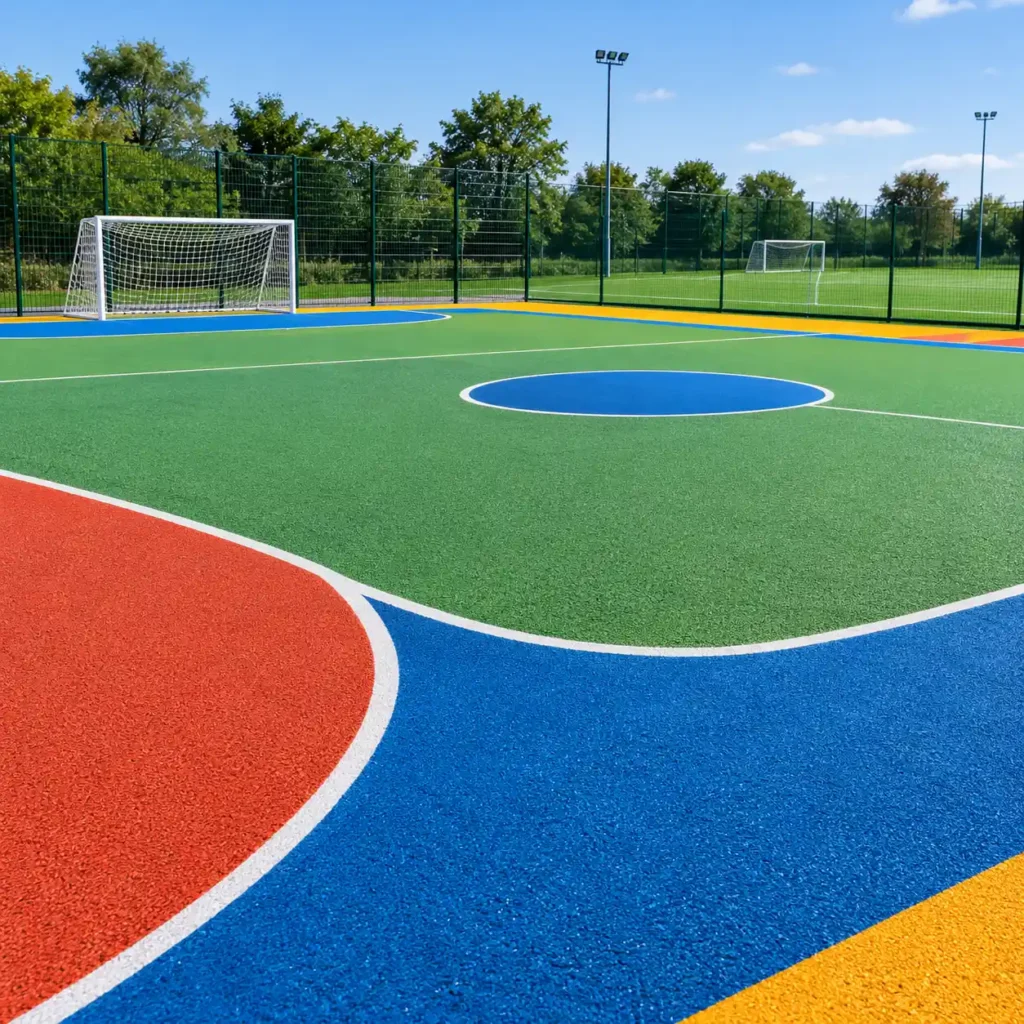
Wetpour rubber surfacing is a seamless safety surface. Installers mix rubber granules with a liquid binder. They then pour and level the mixture on site. The result is one continuous, springy layer with no joins.
Some people call it poured-in-place rubber, or PIP. Industry guides describe it as a unitary safety surfacing used on playgrounds, fitness areas and sports facilities. The seamless finish also helps wheelchair users move across the surface with ease.
Wetpour looks different from loose rubber mulch or rubber tiles. It has no gaps, no edges to lift and no pieces to scatter. Therefore, it stays tidy and safe for years.
How Wetpour Rubber Surfacing Works: Layer by Layer
Wetpour is a two-layer system. Each layer has its own job. Together, they protect players and give the surface a clean, colourful finish.
The Cushion Layer
The bottom layer does the heavy lifting. Installers make it from shredded rubber, usually recycled tyre rubber called SBR. They bind the rubber with polyurethane and pour it to a set thickness.
This layer absorbs shock. When a player falls, the cushion compresses and spreads the force. As a result, the risk of injury drops. Thicker cushion layers protect against higher falls, so the thickness depends on the equipment and the use of the area.
The Wear Layer
The top layer faces the sun, rain and boots. Installers usually make it from EPDM granules, a durable synthetic rubber. EPDM rubber resists heat, ozone and weather, which makes it a smart choice for outdoor sports areas.
EPDM also comes in many colours. Designers use that to mark court zones, create track lanes or add school colours. Furthermore, the colour sits in the granule itself, so it holds up well against fading.
The Binder
Polyurethane glues everything together. It coats each granule and bonds the two layers to the base. Once it cures, the surface forms one flexible sheet. In short, the binder turns loose rubber into a tough, seamless floor.
How Installers Lay Wetpour on a Sports Field
The installation follows a clear process. Each step affects how long the surface lasts, so careful work matters.
Preparing the Base
First, the team prepares the ground. They clear the site, level the area and compact a stable base. This base is usually asphalt, concrete or compacted stone. Drainage also matters at this stage. Water that sits under the surface can weaken the bond over time.
Mixing and Pouring
Next, the crew mixes the SBR granules with binder in a large mixer. They spread the mix across the base and trowel it smooth to the planned depth. Then they repeat the process with the EPDM wear layer on top. Skilled hands make a big difference here, because an uneven pour shows quickly.
Curing
Finally, the surface cures. Dry weather helps, since moisture reacts with the binder. After curing, the surface becomes firm yet springy. Players can then use the area. Most installers advise keeping heavy use off the surface until it fully sets.
Where Wetpour Works Best on Sports Fields
Wetpour does not suit every sport. However, it shines in several places.
Running Tracks and Fitness Zones
Wetpour gives joggers and sprinters a forgiving, even surface. It also handles heavy foot traffic. Many schools use it around their fields for tracks and training paths.
Play Areas and School Sports Zones
Children fall often, so schools value the shock absorption. Wetpour also works well beneath climbing frames and activity equipment. If your school needs a full outdoor upgrade, our education facilities landscaping page shows how we approach those projects.
Multi-Use Courts and Borders
Clubs often use rubber around the edges of pitches and courts. These borders protect players who run off the field of play. They also create clean transitions between different surfaces.
Wetpour Versus Artificial Turf on the Field of Play
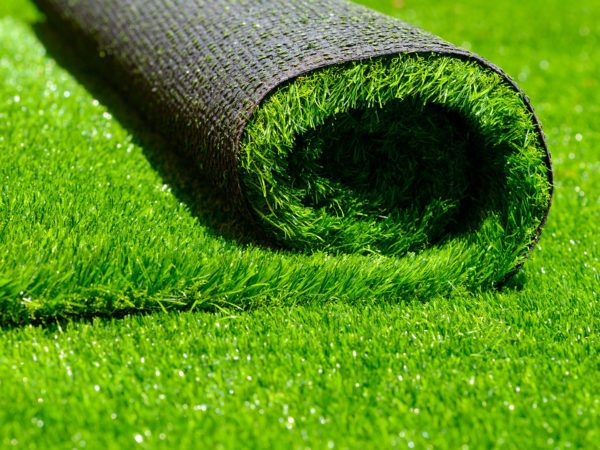
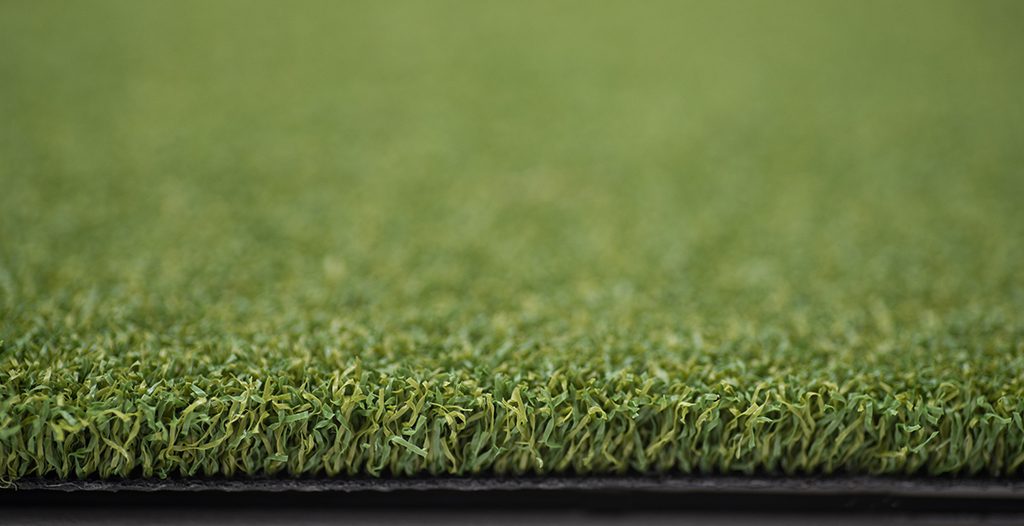
Wetpour excels at impact protection. Artificial turf, on the other hand, excels at the playing surface itself. Football, hockey, rugby and cricket all need the grip, ball roll and feel that turf provides.
For this reason, many facilities use both. They install turf where the game happens. They then add wetpour around it for safe walkways, play zones and borders. This mix gives you protection and performance in one site.
Our sports turf solutions suit pitches that take heavy use in all weather. For a full-size pitch or a five-a-side field, see our soccer field construction service. We also build and resurface tennis courts and padel courts for clubs and private owners.
Younger players need soft landings too. Our playground turf gives children a safe, clean play area without mud or patchy grass.
Caring for a Wetpour Surface
Wetpour needs little upkeep. Still, a few habits extend its life.
Sweep away leaves and grit regularly. Rinse the surface with water and mild cleaner when it gets dirty. Remove chewing gum and oil spills quickly. Also, check the edges and seams every season. Small tears are easy to repair when you catch them early.
Avoid sharp objects and heavy vehicles on the surface. In addition, keep sprinklers pointed away from the rubber, because constant water can break down the binder.
Plan Your Sports Surface With Confidence
Wetpour rubber surfacing gives sports facilities a safe, seamless and colourful finish. It works best on tracks, play zones and borders. Artificial turf handles the playing field itself. When you combine them wisely, you get a facility that looks sharp and protects every player.
LawnKing Gardens builds and maintains sports surfaces across Randburg, Midrand and greater Johannesburg. We specialise in artificial turf, soccer fields, tennis courts and padel courts. We can also help you plan how turf, paving and irrigation fit together on your site. See our artificial grass range to get started.
Ready to upgrade your sports field? Contact LawnKing Gardens or call us on 068 474 7303 for a free estimate.
Related Posts:
- How Do You Clean and Sanitize Rubber Wet Pour Surfaces in Public Playgrounds?
- What Drainage Solutions Are Needed for Artificial Grass Fields in Johannesburg?
- Is Rubber Wet Pour or Artificial Grass Better for High-Traffic Playground Areas?
- How Long Does Artificial Grass Installation Take for a Standard Sports Field?
- What Fall Height Protection Does Rubber Wet Pour Provide for School Playgrounds?