Rubber Wet Pour vs Artificial Grass: Cost in Johannesburg
Choosing the right surfacing solution for your outdoor space in Johannesburg involves more than just aesthetics. Property owners across Randburg and Midrand face an important decision between rubber wet pour and artificial grass. Both options offer unique benefits, yet they come with significantly different price tags and long-term value propositions.
Understanding the cost difference between rubber wet pour and artificial grass in Johannesburg helps you make an informed investment decision. This comprehensive guide breaks down pricing, installation expenses, maintenance costs, and overall value for money in the Gauteng region.
Understanding Rubber Wet Pour Surfacing
Rubber wet pour creates a seamless, cushioned surface that offers excellent safety features. This surfacing option consists of two distinct layers that work together to provide impact absorption and durability.
The base layer uses recycled rubber granules, typically sourced from recycled tyres. Meanwhile, the wear layer features colourful EPDM rubber granules that create the visible surface. Installation teams mix these materials with polyurethane binder before pouring them directly onto prepared ground.
Consequently, wet pour rubber surfaces offer unlimited design potential. You can create custom colours, patterns, logos, and even three-dimensional shapes. Schools, creches, and playgrounds throughout Johannesburg favour this option for its superior impact absorption properties.
Exploring Artificial Grass Solutions
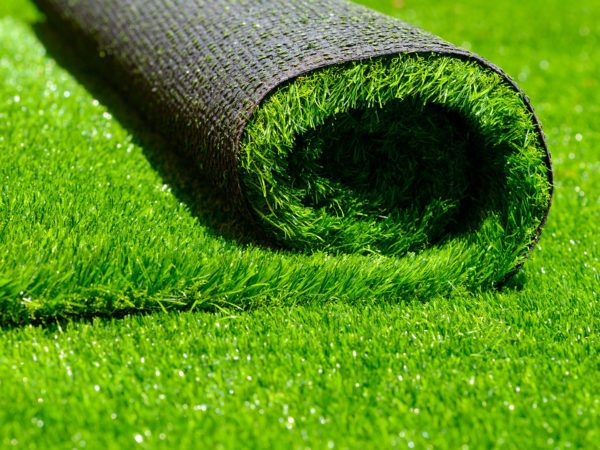
Artificial grass has revolutionised landscaping across South Africa’s urban centres. Modern synthetic turf closely mimics natural grass while eliminating constant maintenance requirements.
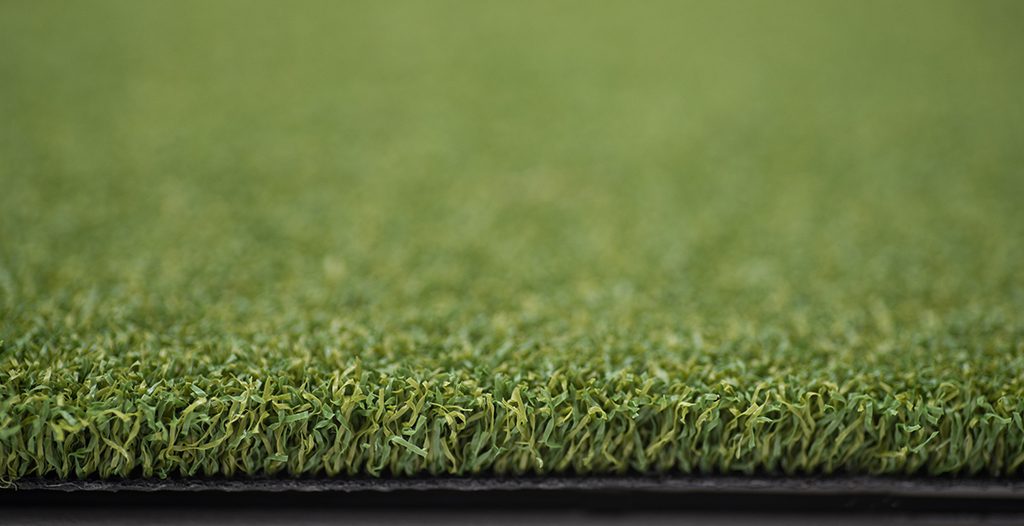
Quality artificial grass features UV-resistant fibres that withstand Johannesburg’s intense sunlight. The multi-layer backing system ensures proper drainage during Gauteng’s summer thunderstorms. Moreover, premium products maintain their vibrant appearance for 15 to 25 years with minimal upkeep.
At LawnKing Gardens, we specialise in supplying and installing various pile heights ranging from 10mm to 35mm. Each variety serves specific purposes, from commercial applications to luxurious residential landscapes.
Breaking Down Initial Installation Costs
Rubber Wet Pour Pricing in Johannesburg
The cost of rubber wet pour in Johannesburg varies based on several critical factors. Pricing typically depends on the depth required for adequate safety standards and the complexity of your design.
Standard wet pour installations generally cost between R800 and R1,500 per square metre. However, basic playground applications with minimal design elements start at approximately R800 per square metre. Premium installations featuring custom colours, intricate patterns, and greater depth can exceed R1,500 per square metre.
Additionally, the depth requirement significantly impacts the final cost. Playgrounds need thicker rubber layers to meet safety fall height standards. A playground with equipment reaching two metres high requires different depth specifications than a simple walkway surface.
Artificial Grass Pricing Structure
Artificial grass costs in Johannesburg range from R260 to R550 per square metre for the grass itself. Professional installation adds R100 to R200 per square metre depending on site preparation requirements.
Therefore, total installed costs typically range between R375 and R750 per square metre. Premium products with higher pile heights, superior UV resistance, and enhanced drainage systems command higher prices. Commercial-grade sports surfaces exceed these baseline costs due to specialized performance requirements.
Several factors influence artificial grass pricing in the Randburg and Midrand areas. Site preparation work, including ground levelling and base material installation, adds to overall expenses. Furthermore, complex installations with multiple seams, obstacles, or intricate cutting patterns increase labour costs.
Our team at LawnKing Gardens provides detailed quotes based on your specific project requirements. We assess drainage needs, ground conditions, and intended use to recommend the most suitable grass variety.
Comparing Long-Term Maintenance Expenses
Rubber Wet Pour Maintenance Requirements
Rubber wet pour surfaces require regular maintenance to preserve their appearance and safety performance. Over time, the surface needs cleaning, repairs, and eventual replacement of worn sections.
Maintenance tasks include regular sweeping to remove debris and occasional deep cleaning to prevent algae growth. In Johannesburg’s climate, moss and algae can develop in shaded areas with poor drainage. Professional cleaning services typically cost between R50 and R150 per square metre annually.
Moreover, rubber surfaces experience wear in high-traffic zones under swings and slides. These areas may require patching or resurfacing every 5 to 8 years. The surface can also become slippery when wet, particularly as it ages.
Replacement becomes necessary after 10 to 12 years of continuous use. This represents a significant recurring expense that property owners must factor into long-term budgeting.
Artificial Grass Maintenance Costs
Artificial grass maintenance remains remarkably minimal compared to both natural grass and rubber surfaces. Regular brushing and occasional hosing down keep the grass looking pristine.
Annual maintenance costs rarely exceed R500 to R1,000 for typical residential installations. This includes brushing to keep fibres upright, removing debris, and hosing to clean the surface. Unlike rubber wet pour, artificial grass doesn’t develop slippery surfaces when wet.
Furthermore, quality artificial grass from reputable suppliers lasts 15 to 25 years with proper care. The surface doesn’t crack, peel, or fade like rubber alternatives. UV-resistant fibres maintain their colour throughout the product’s lifespan.
Property owners save substantially on water bills by eliminating irrigation needs. Johannesburg residents face increasing water costs and usage restrictions. Artificial grass provides year-round greenery without consuming precious water resources.
Evaluating Total Cost of Ownership
Five-Year Cost Projection for Rubber Wet Pour
Let’s examine a typical 50 square metre installation in Randburg. Initial installation at R1,000 per square metre costs R50,000. Annual maintenance at R100 per square metre adds R5,000 yearly.
Over five years, total costs reach R75,000 for this scenario. This calculation includes basic cleaning and minor repairs but excludes major resurfacing work. High-traffic areas may require additional investment for patching worn sections.
Five-Year Cost Projection for Artificial Grass
Using the same 50 square metre area, artificial grass installation at R500 per square metre costs R25,000 initially. Annual maintenance averaging R750 adds R3,750 over five years.
Therefore, total five-year costs equal approximately R28,750. This represents significant savings compared to rubber wet pour. Additionally, the artificial grass remains in excellent condition, requiring no replacement within this timeframe.
Application-Specific Considerations
When Rubber Wet Pour Makes Financial Sense
Rubber wet pour excels in specific applications where its unique properties justify the higher investment. Playgrounds with tall equipment require superior impact absorption that wet pour delivers effectively.
Creches and preschools throughout Gauteng often choose wet pour for critical fall zones. The seamless surface eliminates tripping hazards while meeting stringent safety standards. Custom designs incorporating educational elements add value beyond simple surfacing.
Water park splash zones benefit from wet pour’s slip-resistant properties and ability to create slopes and curves. These specialized applications offset the higher initial investment through enhanced safety and design flexibility.
When Artificial Grass Offers Better Value
Artificial grass installations provide superior value for most residential and commercial landscaping projects. Gardens, patios, and balconies throughout Johannesburg benefit from year-round greenery without maintenance hassles.
Residential properties save significantly on water bills and maintenance labour. Furthermore, artificial grass enhances property value while creating usable outdoor space regardless of weather conditions. Office parks and commercial properties maintain professional appearances without ongoing gardening costs.
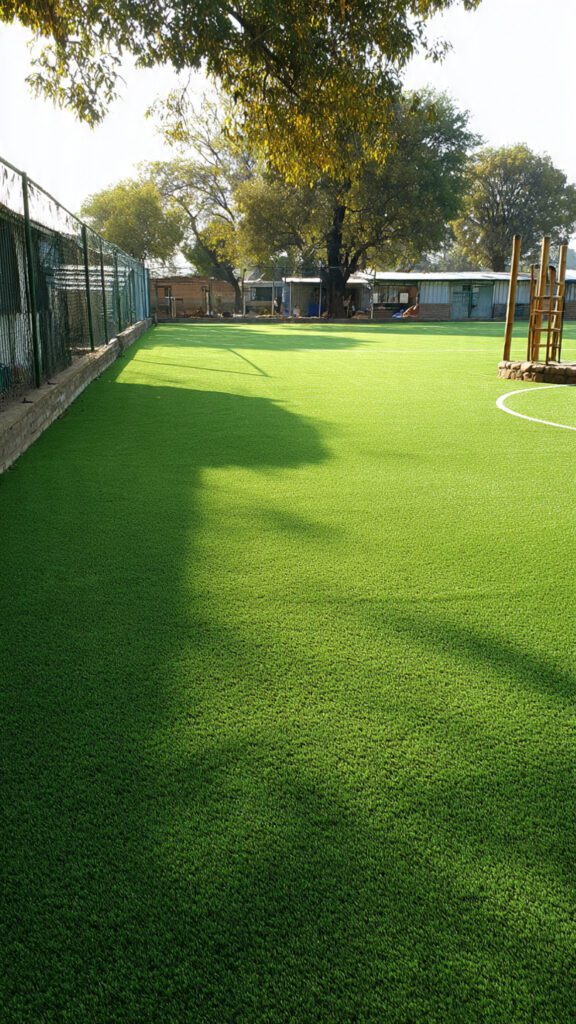
Sports facilities benefit from specialized sports turf options designed for soccer fields, tennis courts, and multi-purpose areas. These installations deliver excellent performance while costing less than rubber alternatives.
Climate Considerations in Johannesburg
Johannesburg’s climate significantly impacts both surfacing options. Summer temperatures frequently exceed 30°C, while winter brings occasional frost.
Rubber wet pour surfaces absorb heat and can become uncomfortably hot during summer days. Children playing on dark-coloured rubber may experience thermal discomfort. Conversely, modern artificial grass incorporates cooling technology that reflects heat rather than absorbing it.
Winter frost affects rubber surfaces more severely than artificial grass. Rubber can become slippery when frost melts, creating safety concerns. Artificial grass maintains traction in various weather conditions throughout the year.
Installation Timeline and Disruption
Rubber Wet Pour Installation Process
Rubber wet pour installation requires specialized equipment and skilled technicians. The process typically takes 3 to 7 days for average-sized projects, depending on design complexity.
Site preparation includes removing existing surfaces, establishing proper drainage, and creating a level base. The rubber application process involves mixing materials on-site and hand-troweling the surface. This labour-intensive process requires specific weather conditions and adequate curing time.
Furthermore, the area remains unusable during installation and curing. Schools and businesses must plan around extended closure periods.
Artificial Grass Installation Efficiency
Professional artificial grass installation moves more quickly than rubber wet pour. Most residential projects complete within 1 to 3 days, minimizing disruption to your property.
Site preparation involves similar groundwork, including levelling and base material installation. However, the grass installation itself proceeds rapidly. Experienced installers precisely measure, cut, and seam the grass to create a seamless appearance.
At LawnKing Gardens, our installation teams work efficiently to minimize inconvenience. The grass becomes immediately usable after installation, allowing you to enjoy your new outdoor space without waiting for curing periods.
Environmental and Health Considerations
Both surfacing options present environmental factors worth considering. Rubber wet pour uses recycled materials, offering an eco-friendly disposal solution for old tyres. However, concerns exist regarding potential VOC (volatile organic compounds) emissions when rubber heats up in direct sunlight.
Artificial grass eliminates pesticide, fertilizer, and herbicide use required for natural lawns. Water conservation represents a significant environmental benefit in water-stressed Johannesburg. Modern artificial grass products increasingly use recyclable materials and environmentally responsible manufacturing processes.
Quality artificial grass products meet international safety standards and contain no harmful substances. Parents and property managers can feel confident about the safety of synthetic turf installations.
Making Your Decision: Key Factors to Consider
Several crucial factors should guide your choice between rubber wet pour and artificial grass in Johannesburg:
Budget constraints play a primary role. Artificial grass offers lower initial costs and significantly reduced long-term expenses. Property owners seeking maximum value typically find artificial grass provides better return on investment.
Intended use determines which surface best meets your needs. Playground equipment fall zones may benefit from rubber wet pour’s superior impact absorption. General landscaping, residential gardens, and most commercial applications favour artificial grass.
Maintenance capacity influences long-term satisfaction. Organizations with limited maintenance budgets benefit from artificial grass’s minimal upkeep requirements. Rubber surfaces demand ongoing professional attention to maintain safety and appearance.
Aesthetic preferences matter significantly. Artificial grass provides natural-looking greenery that enhances property appeal. Rubber wet pour offers design flexibility for creative applications but lacks the organic appearance of grass.
Climate adaptation proves important in Johannesburg’s variable weather. Artificial grass performs consistently throughout the year without becoming slippery or uncomfortably hot.
Why Choose LawnKing Gardens for Your Artificial Grass Installation
LawnKing Gardens serves Randburg, Midrand, and surrounding areas with premium artificial grass solutions. Our extensive experience ensures professional installations that maximize your investment.
We offer comprehensive services from initial consultation through installation and after-care support. Our team assesses your specific requirements, considering factors such as drainage, intended use, and budget constraints.
Quality differentiates our products from cheaper alternatives. We supply only premium artificial grass with superior UV resistance, realistic appearance, and proven durability. Our installations include proper drainage systems and expert seaming for seamless, professional results.
Moreover, our competitive pricing ensures you receive excellent value without compromising quality. We provide transparent quotes with no hidden costs, helping you budget confidently for your project.
Conclusion: Artificial Grass Delivers Superior Value
The cost difference between rubber wet pour and artificial grass in Johannesburg clearly favours artificial grass for most applications. Lower initial costs, minimal maintenance expenses, and longer lifespan create compelling financial advantages.
Rubber wet pour serves specialized purposes where its unique properties justify premium pricing. Playground fall zones and certain safety-critical applications benefit from wet pour’s superior impact absorption.
However, residential properties, commercial landscapes, and general outdoor spaces throughout Randburg and Midrand achieve better value with artificial grass. The combination of lower costs, reduced maintenance, and enhanced aesthetics makes artificial grass the preferred choice.
Contact LawnKing Gardens today for a free consultation and quote. Our team will help you select the perfect artificial grass solution for your property, ensuring beautiful results that last for decades.
Transform your outdoor space with professional artificial grass installation that delivers lasting beauty, functionality, and value. Let us show you why property owners across Johannesburg choose artificial grass over rubber alternatives.
Further Reading:
- How Long Does Artificial Grass Last After Installation?
- LM Grass Watering Schedule
- Understanding Playground Surfacing Options
- Artificial Grass Pricing Guide 2025
Recent Posts:
- Is Artificial Grass Safe for Children’s Play Areas in South Africa
- How Long Does Rubber Wet Pour Surfacing Last on Johannesburg Playgrounds?
- Putting Greens vs. Pool Surrounds vs. Play Areas: Matching Turf Pile Height to Your Craighall Property Zones
- Belgian Malinois, Huskies, and Staffies: Which Artificial Grass Survives Lonehill’s Most Destructive Dogs?
- How Randburg’s Water Restrictions Made Synthetic Lawns a Financial No-Brainer (2025 Data)